


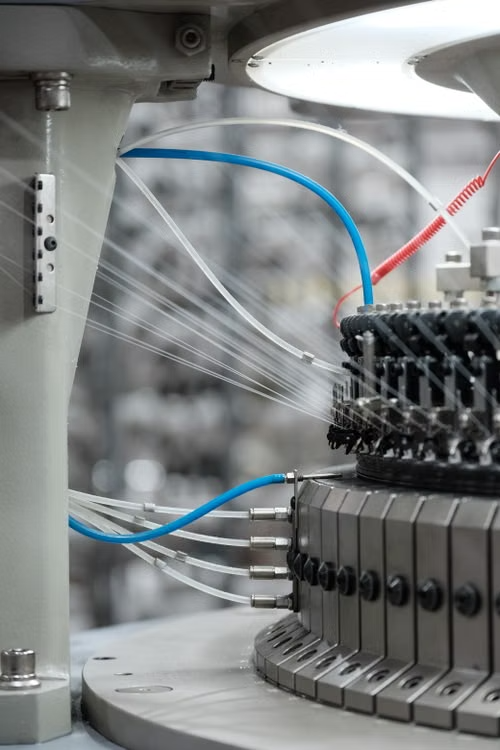
Tape & Reel automation for processes that require more than packaging
In many applications, Tape & Reel is not merely a packaging step. Before an electronic component ends up in embossed carrier tape, it often has to be taken from an input medium, singulated, handled orientation-correct, identified, inspected and sorted according to the inspection result.
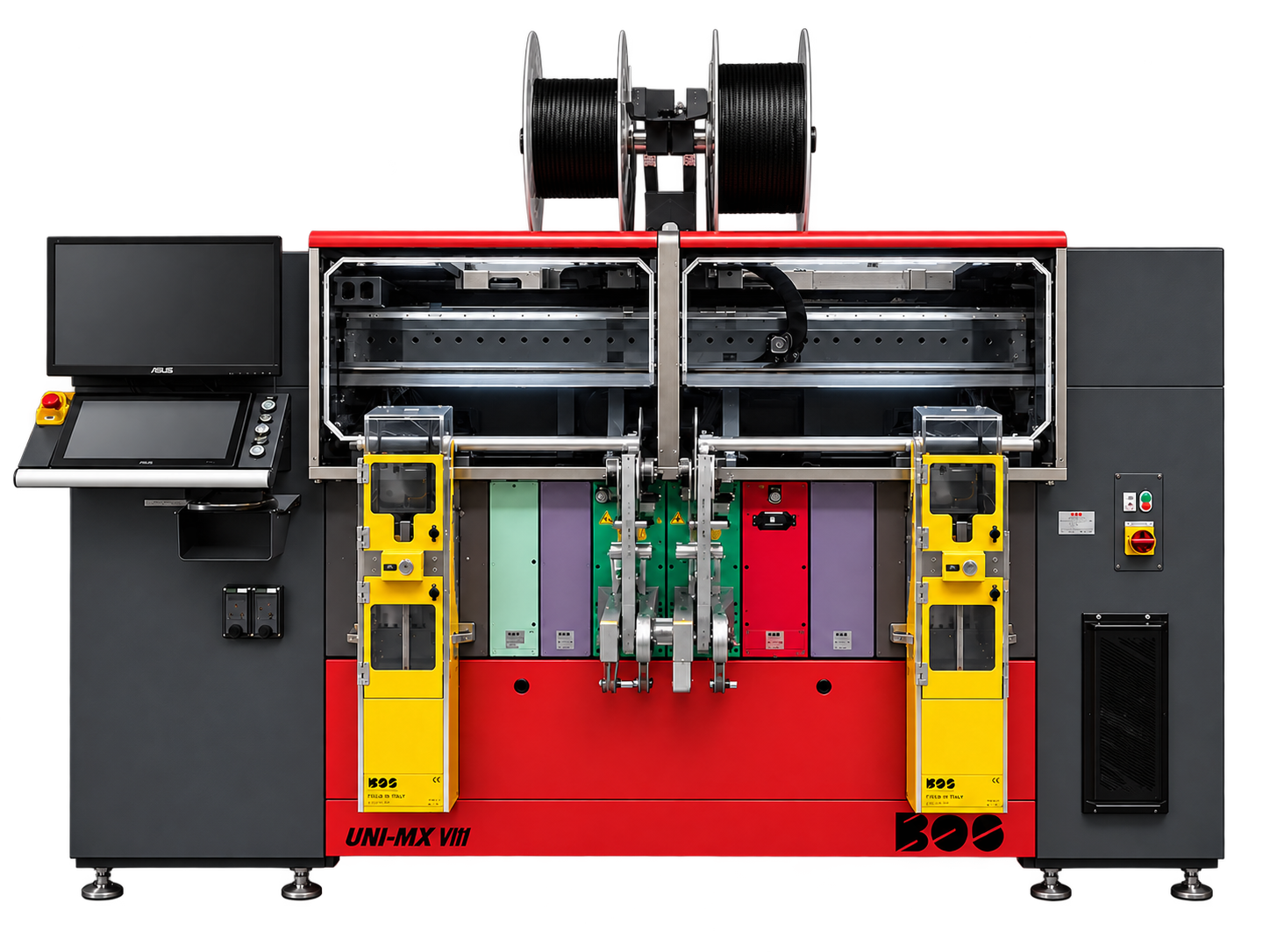
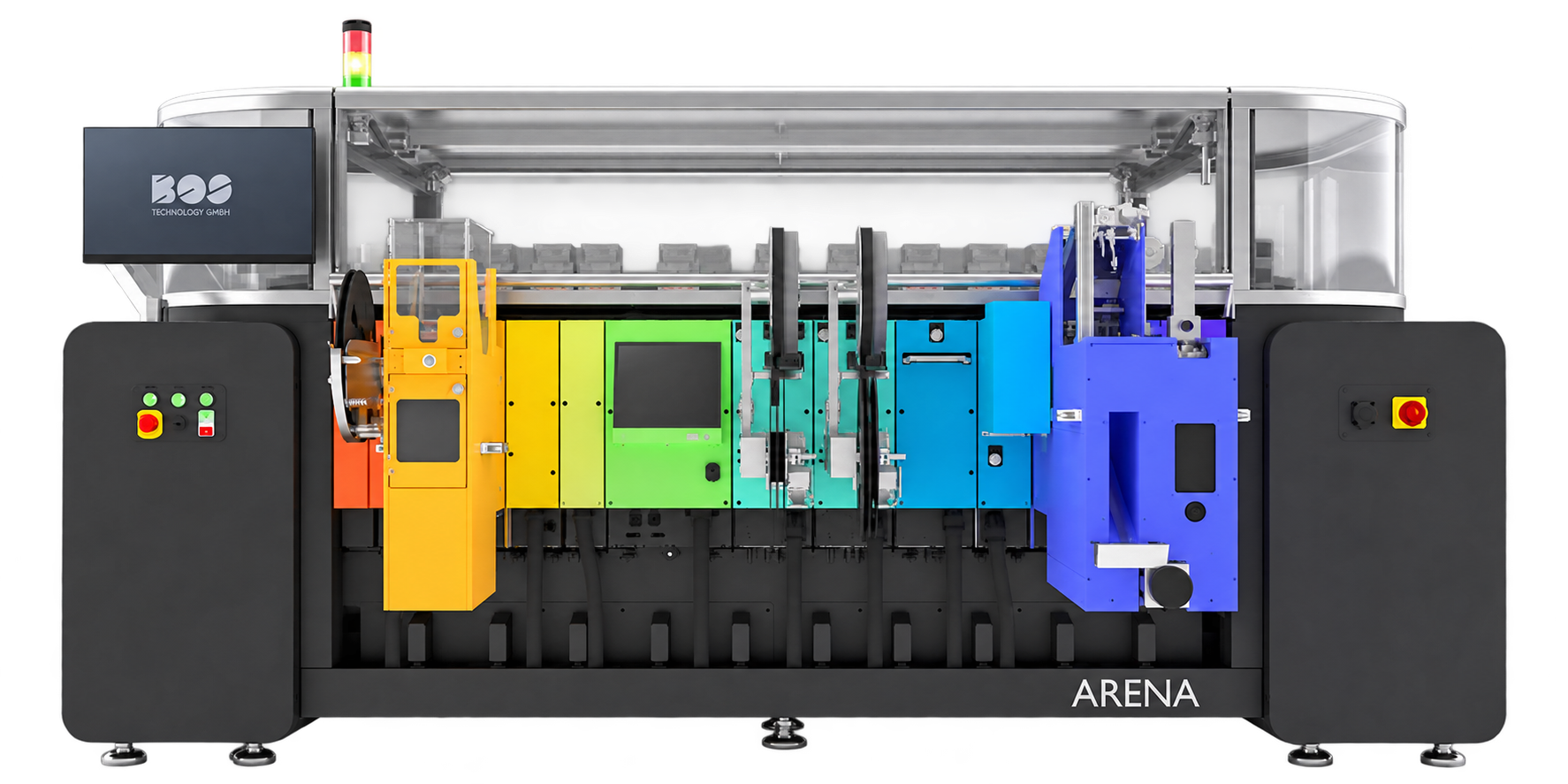
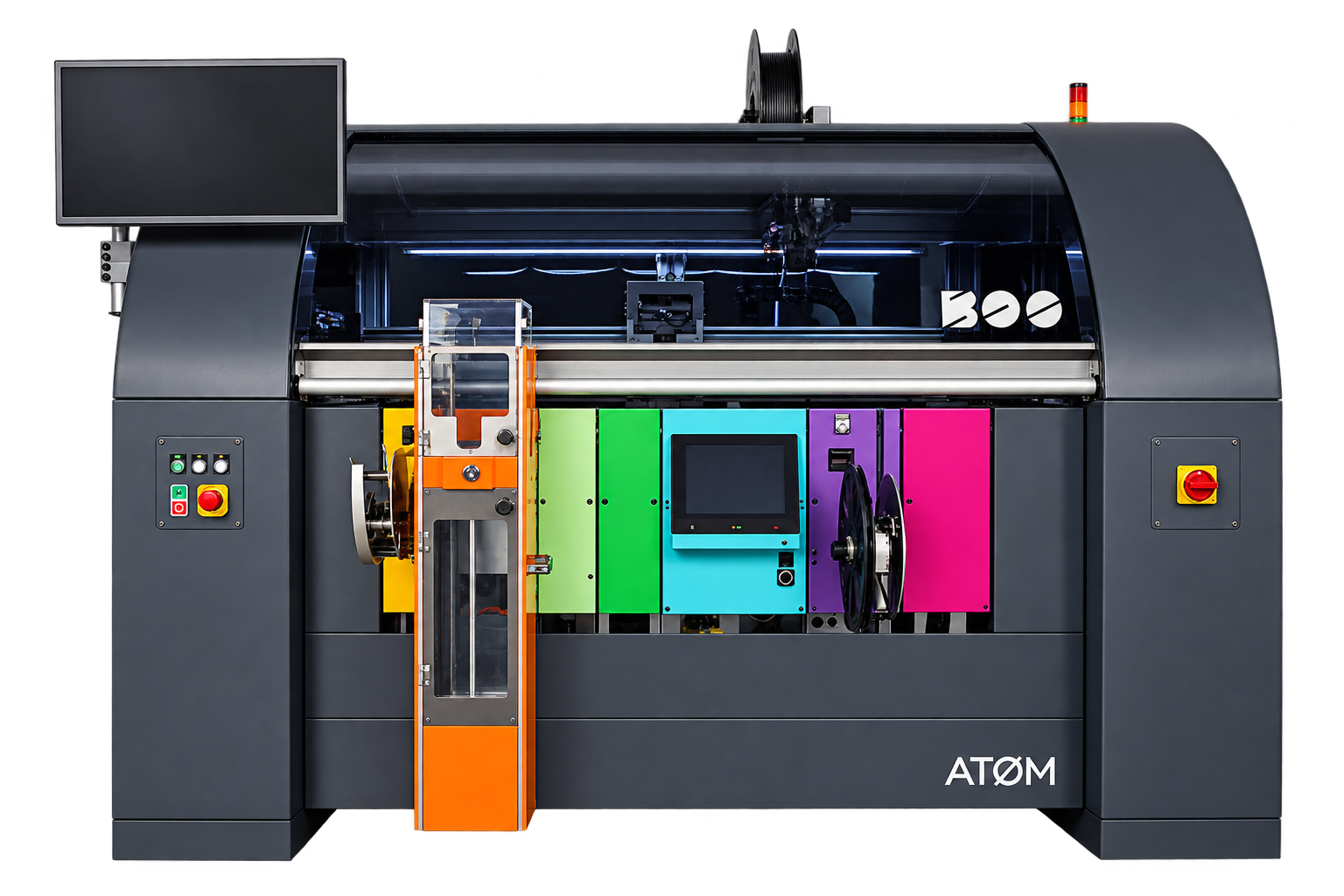
BOS develops Tape & Reel machines for exactly these process chains. Machine platforms and modules are combined and adapted so that input, handling, inspection, sorting and output fit the specific component and production process.
Material flow
From input medium to finished tape
The material flow can look very different depending on the application.
Tray to Tape
Components are picked from trays, aligned and inspected as required, and then packed orientation-correct into embossed carrier tape.
Tube to Tape
Electronic components are fed from tubes and transferred into tape with the required process and inspection steps.
Tape to Tape
Components are taken from existing tape, processed or inspected, and then packed again in a defined way.
Depending on the customer process, combinations such as Frame to Tray, Frame to Tube, Bulk to Tape or customer-specific input/output variants are also possible. What matters is not the machine designation, but the process chain between input and output.
Process
Handling, inspection and packaging in one process
A Tape & Reel process at BOS can be combined with additional functions. This creates a continuous automated quality and material flow instead of a pure packaging machine.
Depending on the application, this can include:
Have your Tape & Reel process assessed
Sample parts and a rough process outline are enough for an initial technical review.
FAQ
Frequently asked questions about Tape & Reel automation
What is Tape & Reel automation?
In Tape & Reel automation, electronic components are handled automatically and packed into carrier tapes or embossed tapes. Depending on the application, the process additionally includes feeding, orientation, optical or electrical inspection, sorting, retest and traceability.
Which input and output media can be combined?
BOS develops processes such as Tray to Tape, Tube to Tape and Tape to Tape, among others. Further combinations are possible depending on the component and application.
Typical media and material flows:
Which components can be processed?
BOS has experience with a range of standard packages from the electronics and semiconductor industry.
Standard packages include:
In addition, customer-specific packages and special component geometries are possible. Whether a component can be processed reliably does not depend solely on its package designation. Relevant factors include geometry, material, sensitivity, surface, gripping options, input medium, inspection requirements and the required cycle time.
Technical feasibility is therefore assessed on a project basis.
Can optical and electrical inspections be integrated directly?
Quality inspection can be an integral part of the Tape & Reel process. Camera systems can be used for position recognition, OCR/OCV, feature inspection and metrological tasks, among other things. Existing BOS modules enable optical 2D and 3D inspections depending on the configuration.
Electrical test technology can also be integrated. Both BOS technology and existing customer measurement and inspection equipment can be used. The aim is to create an end-to-end system in which the inspection result immediately determines sorting, retest or further processing.
Typical optical functions:
How does traceability work and which interfaces are possible?
Especially for quality-critical electronic components, automation does not end with mechanical motion. Depending on customer requirements, recipe management, data acquisition, identification and traceability can be part of the machine software. Customer-specific protocols and existing software can also be part of the project.
BOS integrates, among others:
When is a standard Tape & Reel machine not enough?
Standard machines make sense when product, input, inspection and output fit an existing machine concept. Custom engineering becomes necessary when several requirements come together that cannot be mapped reliably or economically with a standard configuration.
Typical reasons include:

Want to automate a production process?
You do not need a finished machine specification for a first conversation. Describe your product, today’s process and the desired result. Together we can clarify which automation is technically and economically sensible.
- Complimentary initial consultation
- In-house production – fast and flexible
- 100% optical and electrical quality control