


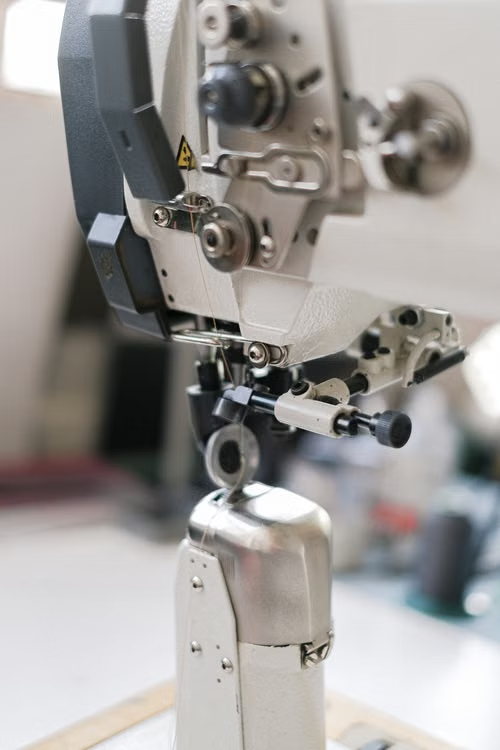
Specialized machine building for processes with no standard solution
Not every production process can be automated with a machine from a catalogue. Special components, multiple variants, specific inspection methods, high demands on handling and process reliability, or existing customer technologies quickly mean that a standard system is no longer a technical or commercial fit.
BOS develops specialized machines consistently from the product, the process and the customer’s requirements. The aim is not to design as much as possible from scratch, but to become custom-specific exactly where it is necessary for a stable, flexible and economical process.
Application
When does a custom specialized machine make sense?
Custom automation is particularly worthwhile when standard equipment does not meet essential process requirements.
- Reliable component handling
The component cannot be reliably fed, gripped or positioned.
- Variants on one machine
Several product variants need to be processed on the same machine.
- Cycle time & process reliability
The required cycle time or process reliability cannot be achieved with existing solutions.
- Integrated inspection processes
Optical, electrical or customer-specific inspections must be integrated into the process.
- Integration into existing systems
Existing measurement, test or software systems need to continue in use, and the machine must fit into an existing line, an MES or a customer-specific data structure.
- No standard solution on the market
No suitable standard machine exists on the market for the specific combination of product, input, process steps and output.
What matters is therefore not volume alone. The decisive factor is the interplay of product, process, quality requirements, variants, cycle time, integration and commercial viability.
Starting point
The process comes before the machine
Customers often describe their task in solution-neutral terms at first: components are to be taken from trays, inspected and then packed orientation-correct into tape. A manual inspection and sorting process is to be automated. Several variants are to run on one machine. Or an existing solution is too slow, too inflexible or not sufficiently process-reliable.
Exactly this description is the right starting point. BOS translates the process requirement into a technical machine concept and only then decides whether an existing machine platform, standardized modules or a largely custom specialized machine is the most sensible basis.
Project workflow
How a specialized machine is created at BOS
Requirements analysis and concept
BOS considers the product, component properties, input and output media, process steps, cycle time, variants, quality characteristics and the existing production environment.
Feasibility study
Critical process steps can be investigated before full machine development. This includes, for example, gripping and handling, feeding, image processing, electrical or optical inspection and the achievable cycle time.
Mechanical and electrical engineering
The machine, assemblies, grippers, feeders, workpiece fixtures and process modules are designed. In parallel, electrical design, sensors, actuators, drive technology and safety systems are developed.
Software and image processing
Depending on the project, BOS develops sequence control, HMI, recipe management, interfaces, data acquisition and traceability. Camera systems can be used for position recognition, OCR/OCV, feature inspection or metrological functions.
Manufacturing, assembly and commissioning
Components are manufactured or procured, the machine is assembled mechanically and electrically, and then commissioned internally. Process and cycle time are optimized and acceptance is prepared.
Installation, training and service
After installation in the production environment, BOS supports production ramp-up, trains operating and maintenance staff, and later assists with spare parts, retrofits, product changeovers or functional extensions.
Discuss your process with BOS
A short description is enough – together we clarify whether a specialized machine makes sense.
Standard technology
As much proven technology as possible
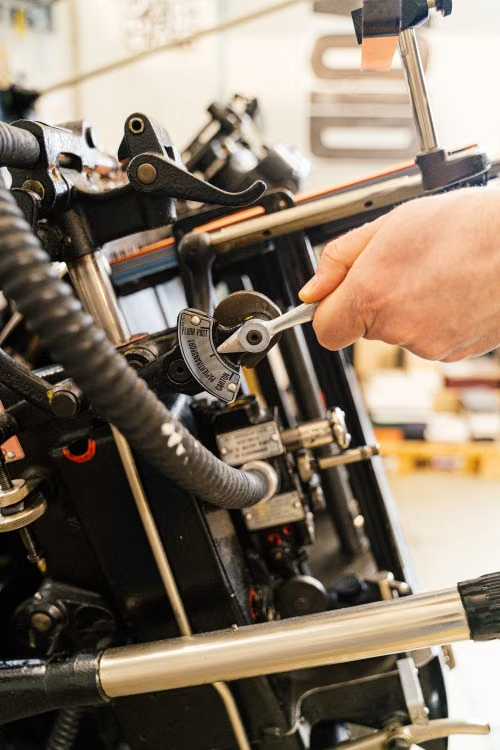
The high share of custom engineering is a strength of BOS, but that does not mean every project starts from scratch. Proven machine platforms, modules, control concepts and technical solutions are used when they fit the application.
Custom development focuses exactly on those elements that are required by the product or the process.
This approach combines technical flexibility with proven components and reduces unnecessary development risk.
Difference
What sets BOS apart in specialized machine building
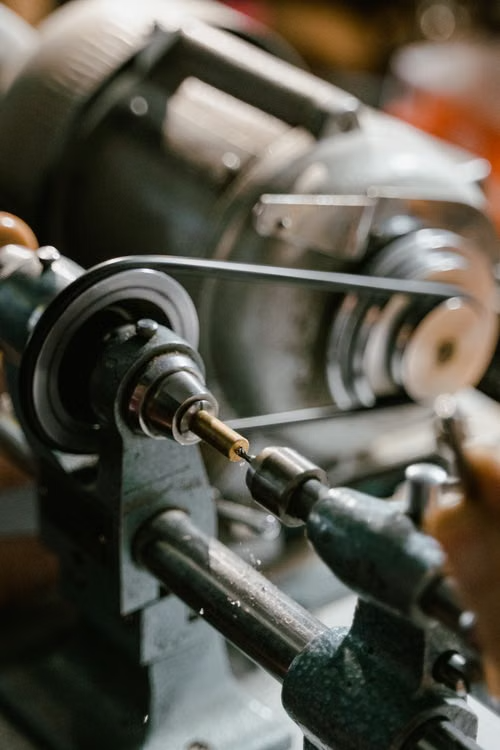
Differentiation does not lie in a single component, but in the combination of several competencies: a high share of custom engineering, modular machine concepts, in-house technical depth and direct support.
BOS does not adapt the process to an existing machine. The company uses proven standard technology where it makes sense, and develops custom solutions where product and process require it. Mechanics, handling, feeding, inspection, software and integration are considered as one overall system.
FAQ
Frequently asked questions about specialized machine building
When is a specialized machine worthwhile compared with a standard machine?
A specialized machine is particularly worthwhile when a standard system only meets central requirements for handling, inspection processes, variants, integration, cycle time or process reliability with significant compromises. The decision should therefore be evaluated technically and commercially for the specific process.
How does the development of a specialized machine proceed?
BOS starts with an analysis of product, process and performance requirements. This is followed, as needed, by feasibility trials, concept development, mechanical and electrical design, software and image processing, manufacturing, assembly, internal commissioning, acceptance and installation.
Does a specialized machine have to be developed entirely from scratch?
No. Wherever possible, BOS combines proven machine platforms and modules with customer-specific components. The principle is: as much standard technology as possible, as much custom development as necessary.
Can existing technology be integrated instead of being replaced?
In many projects, working customer or inspection technology is already in place. BOS can integrate such systems into new automation solutions rather than replacing them without a technical reason.
Typical interfaces and systems include:
What information does BOS need for a feasibility assessment?
The earlier reliable information on the product and process is available, the more accurately the machine concept can be assessed.
Particularly helpful are:
- Component geometry, material and special product properties
- Sample parts, drawings and 3D data
- Input and output medium
- Desired process steps
- Target cycle time and volumes
- Product variants and changeover requirements
- Inspection and quality requirements
- Mechanical, electrical and software interfaces
- Available floor space and conditions of the production environment
- Requirements for data acquisition and traceability
Can a BOS specialized machine be extended later?
Retrofits, product changeovers and later functional extensions are part of BOS service. Which expandability should sensibly be prepared should already be considered in the concept phase based on the expected product and process development.

Want to automate a production process?
You do not need a finished machine specification for a first conversation. Describe your product, today’s process and the desired result. Together we can clarify which automation is technically and economically sensible.
- Complimentary initial consultation
- In-house production – fast and flexible
- 100% optical and electrical quality control